Megan Marlatt
myths & mummers
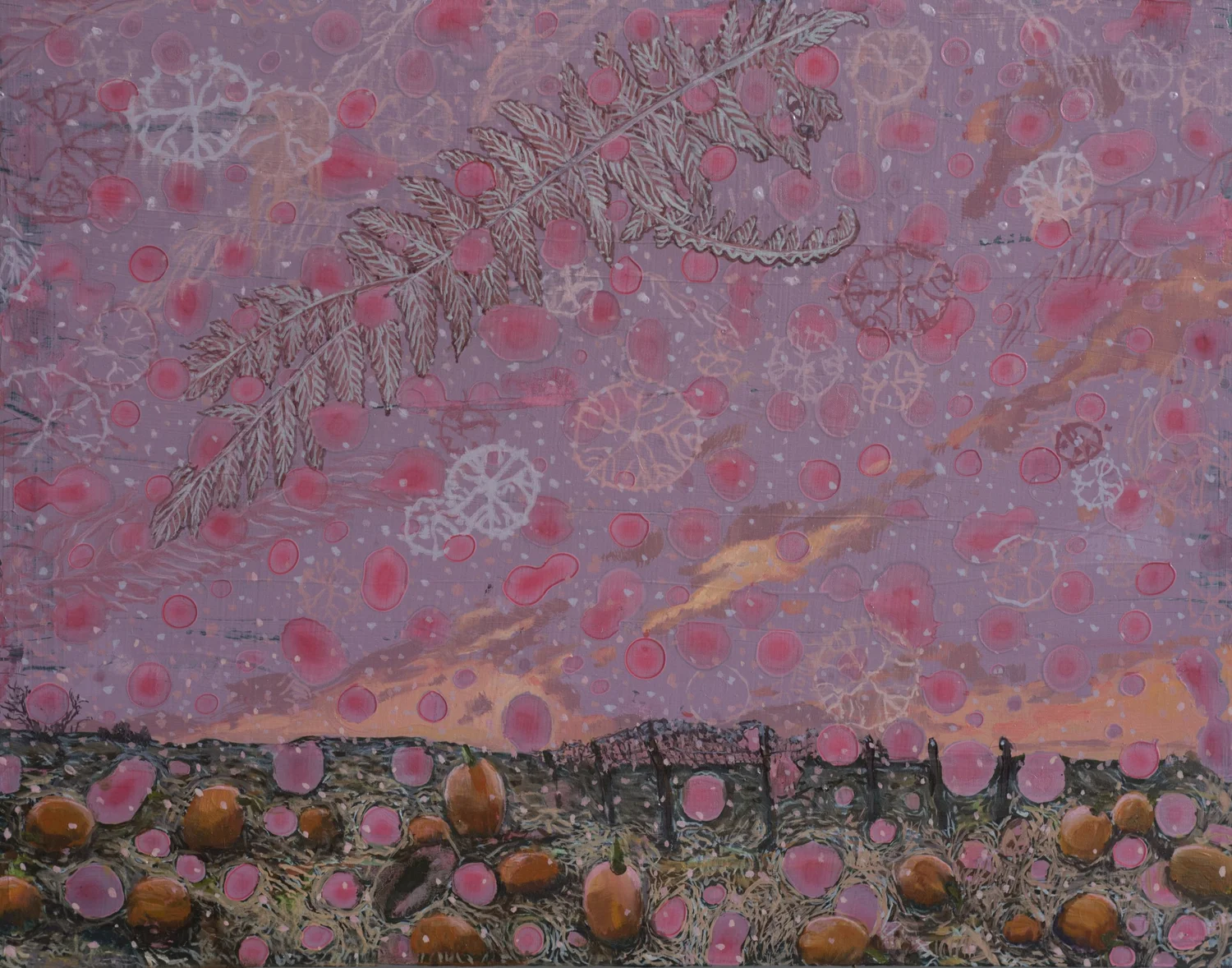
The seasons will not be what they once were.
Charlottesville, 2026
Since first learning to make capgrossos — big-head masks — from the Catalonian folk artists Ventura and Hosta in 2012, I have studied the European tradition of pre-Lenten carnival.
Most Americans think of amusement park rides when they hear the word "carnival," but I'm referring to an old event evolved from Western pagan rituals — the same one Bruegel painted in The Fight Between Carnival and Lent nearly 500 years ago.
Carnival's time frame teeters between the weakening night force of winter and the strengthening day force of spring. Many of its rituals across Western Europe involve shedding the evils of winter, waking up the icy Earth, and ushering in the fecund warmer months of spring.
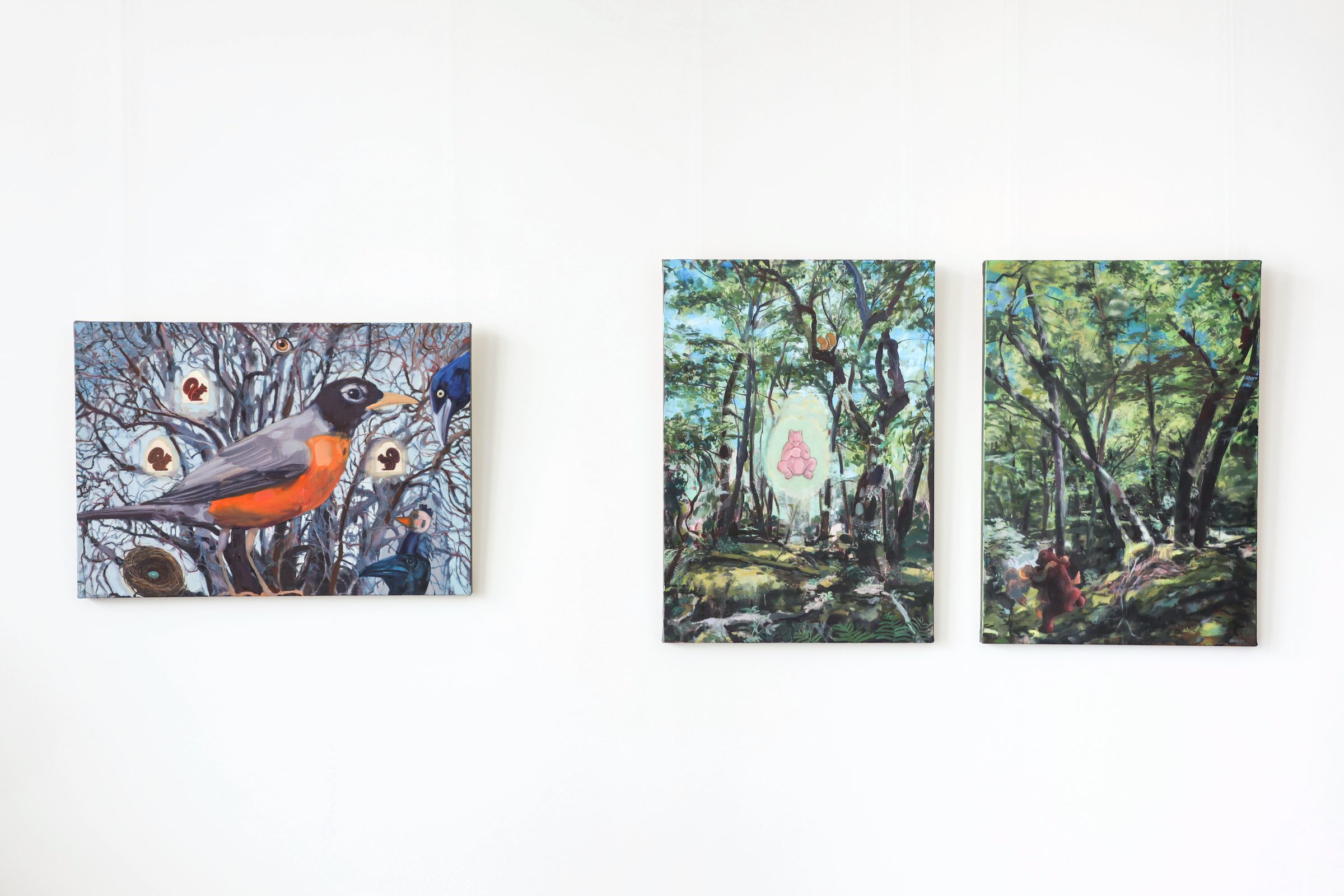
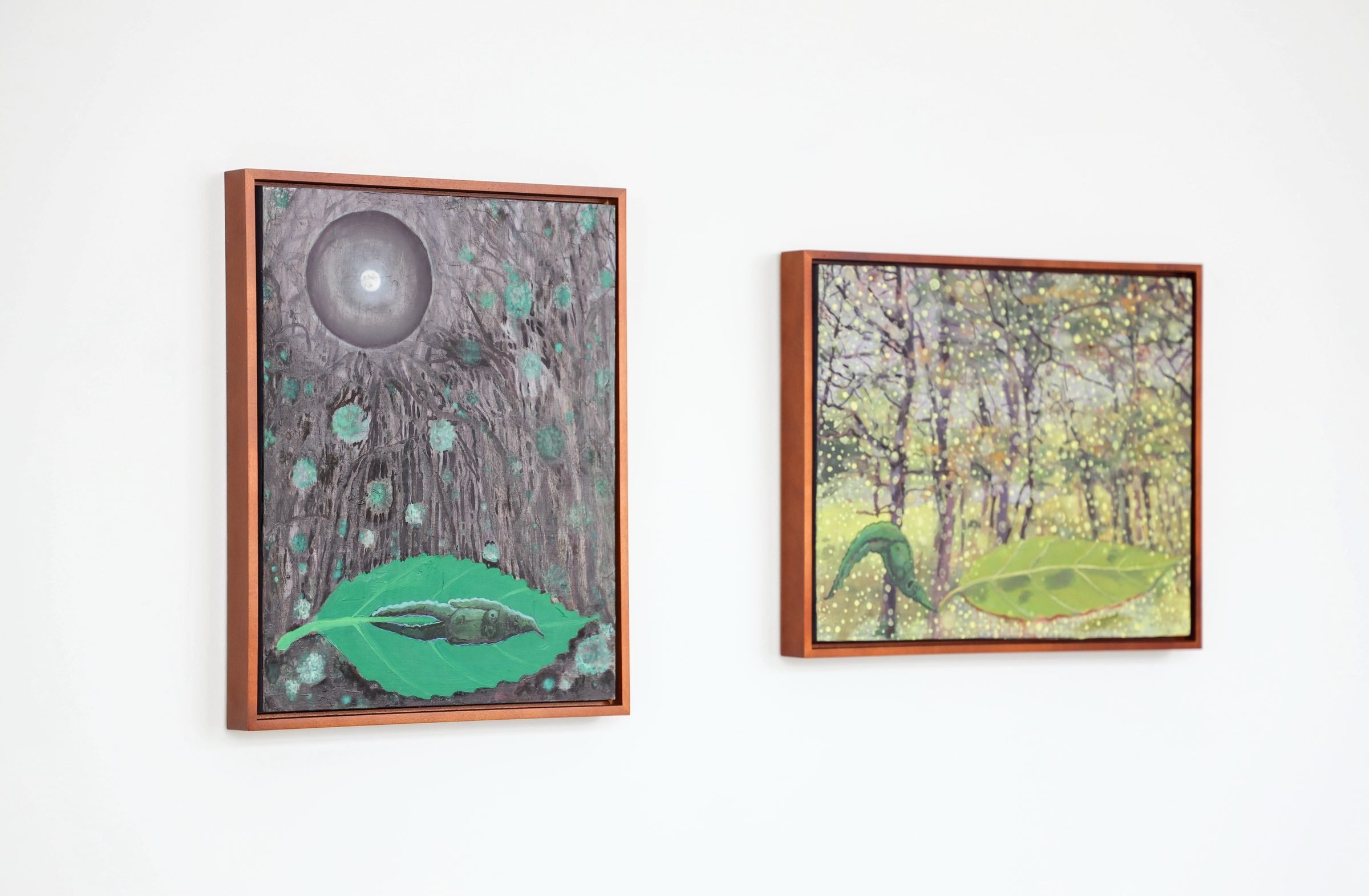
But what if one day the Earth doesn't want to wake up?The anticipation of the four seasons runs deep in our narratives, economy, and psyche. With climate change, the seasons will not be what they once were. My narrative paintings use personifications — Persephone, Jack Frost — as indicators of our cultural ties to nature.

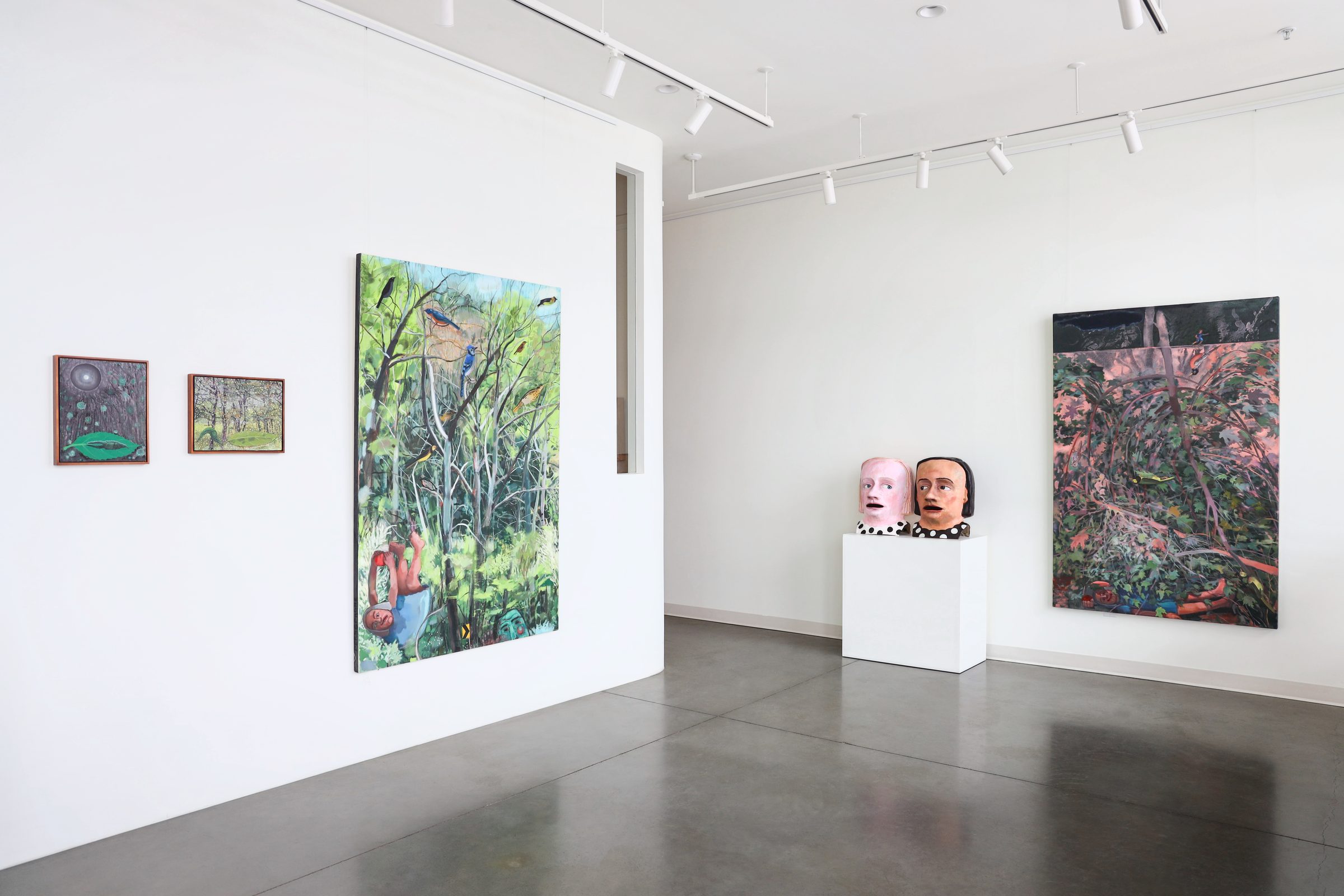
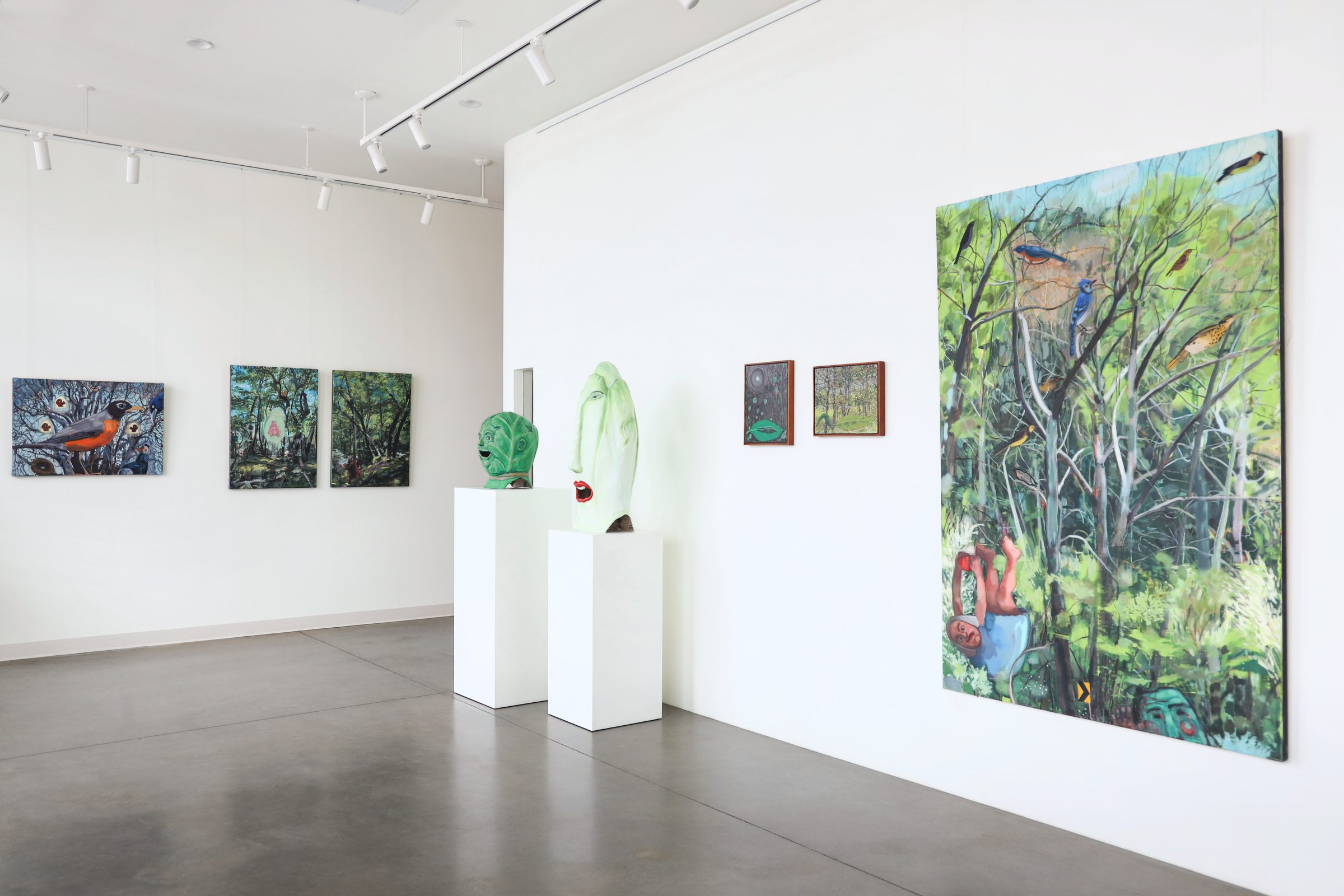
Installation views
Painter, mask-maker, storyteller.
Megan Marlatt is a painter and sculptor whose work fuses European folk tradition, climate consciousness, and a love of the strange. Her paintings populate quietly transformed Western landscapes with seasonal deities — Persephone, Jack Frost — and her papier-mâché big-head masks (capgrossos) walk in processions from Catalonia to Bozeman.
Marlatt taught painting at the University of Virginia for over two decades and has shown at the McLean Project for the Arts, the Visual Arts Center of Richmond, and Catalyst Contemporary, among others.